Heat and Wellbeing: Why Warm Nights Can Change Tomorrow's Comfort
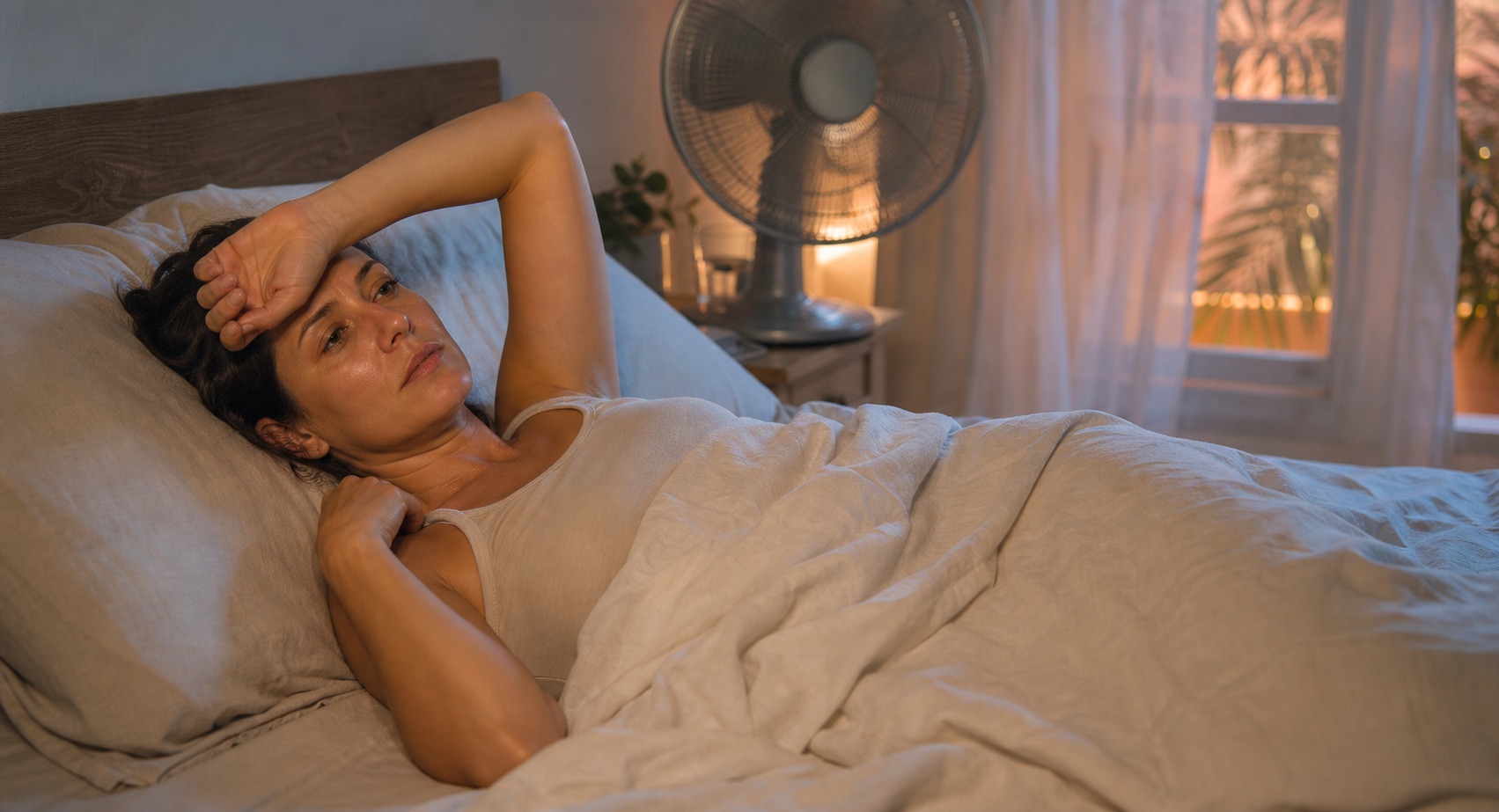
Hot days matter, but hot nights often matter more for wellbeing. If the body and bedroom do not cool enough overnight, sleep may become lighter and tomorrow can feel harder.
Weathera connects heat with humidity, overnight comfort and next-day signals such as energy, focus, headache sensitivity and body comfort.
What this weather factor means
Temperature tells only part of the story. Humidity, wind, cloud cover, indoor heat buildup and overnight low temperature all affect how sleep feels.
A city can have the same daytime high on two days, but the day after a warm humid night may feel much more demanding.
Why some people may feel it
Sleep is closely tied to energy, mood, pain sensitivity and concentration. Weather that disrupts sleep can make unrelated stressors feel stronger the next day.
Heat can also raise hydration needs and make evening routines harder, especially during multi-day warm spells.
How Weathera shows it
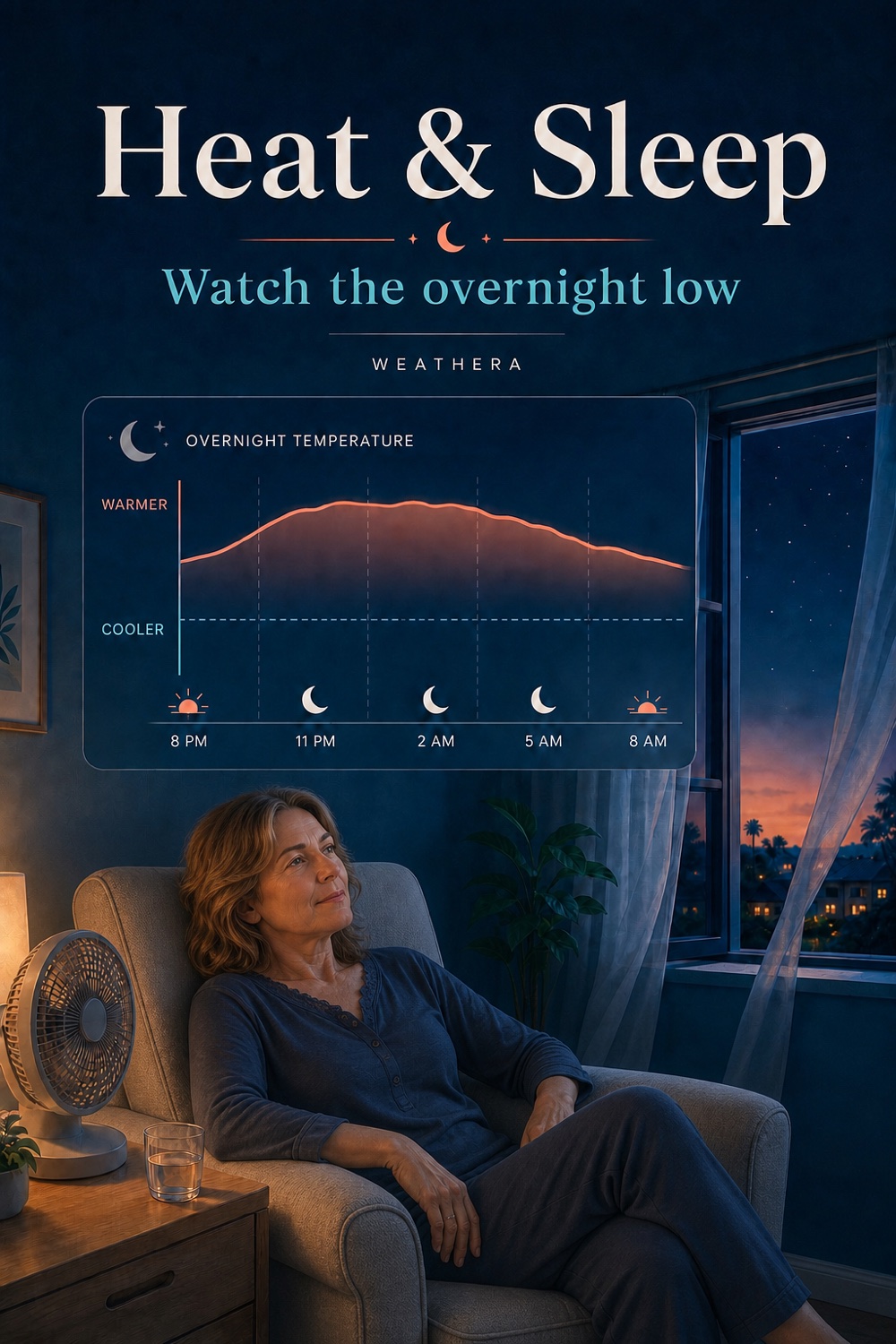
Weathera highlights temperature range, humidity and comfort-related signals so you can see when heat may affect sleep and next-day energy.
Use the sleep quality card and city forecast together: the overnight pattern often explains the daytime feeling.
What to watch today
- High daytime temperature followed by a warm overnight low.
- High humidity in the evening or overnight.
- Low wind and cloudy conditions that keep heat trapped.
- Several warm nights in a row with lower sleep recovery.
FAQ
Why do I sleep badly in hot weather?
The body normally cools for sleep. Warm rooms and humid air can make that harder, leading to lighter or more restless sleep.
Should I watch the daytime high or overnight low?
For sleep, the overnight low and evening humidity are often more useful than the daytime high alone.
Can poor sleep increase weather sensitivity?
Poor sleep can lower tolerance for discomfort, headache triggers, stress and heat, so weather may feel stronger the next day.